
Power outage in my master bedroom. What should I do?
Are you experiencing a frustrating power outage in my master bedroom? Don’t let the darkness and inconvenience ruin your evening. In this blog post, we’ll explore some possible causes for the loss of power and provide tips on troubleshooting and fixing the issue. We’ve got you covered, from checking your circuit breaker to determining if it’s a problem with your wiring. Having no power in the master bedroom can be annoying if you’ve had a long day at work. So, grab a flashlight, and let’s get started on restoring power to your sanctuary.
Tripped Circuit Breaker
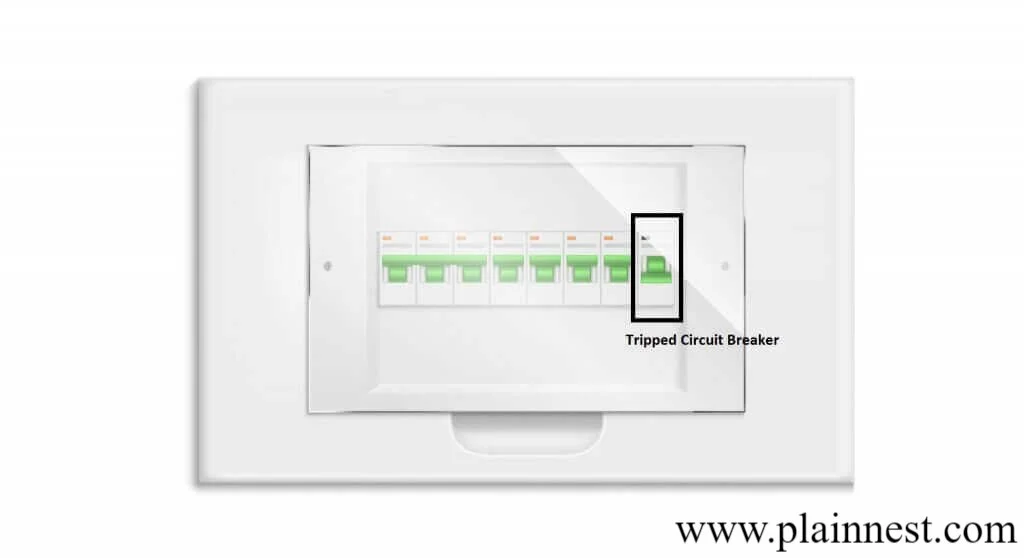
A tripped circuit breaker may have caused the localized power outage. This can occur if there is too much demand on a circuit or if a malfunctioning device has increased the electrical load. To fix this, unplug all appliances in the affected area and inspect your circuit breaker. Many homes or apartments have a breaker box that clearly labels each breaker. It is often located on the back of the panel, and the tripped breaker can be identified by its “off” or “tripped” position.
If the tripped circuit breaker is in the “off” position, turn it back to “on.” If it’s in the “tripped” position, first switch it off and then back on. Sometimes it can be challenging to determine if it’s in the “tripped” position, so you should observe and check it by touch if uncertain. If the tripped breaker was the issue, this action should restore power to that area. If it doesn’t solve the problem, close the panel and inspect the appliances for malfunction.
Image Credit: https://www.vecteezy.com/
GFCI outlet
The next step in the investigation into no power in the master bedroom is to look for any GFCI outlets in the room. This is a breaker-equipped outlet. On the outlet, there are two small buttons. The first is “test,” and the second is “reset.” Try pressing the reset button to see if that solves the problem. Remember that the GFCI outlet may not be in the room that lost power, so look in adjoining rooms for it. Suppose this is the case, and the power is restored in that room. In that case, you should inspect the appliances you have plugged in and ensure you are staying within the outlets.
If your circuit breaker did not trip and the GFCI Is in good working order, it’s time to call an electrician. If this is the case, there are several reasons why a single room could lose power, and only a certified electrician can determine the cause.

Loose connection on the circuit breaker terminal
A less common issue occurs when the hot wires on the main service panel circuit breakers are not tightly connected to the breaker. When this happens, you may notice light flickering or service issues on fixtures throughout the circuit. When connecting to circuit breakers, be sure to remove the appropriate amount of wire insulation and place only the bare wire under the terminal slot before tightening. Insulation beneath the connection slot is prohibited by code.
To resolve the issue, a professional electrician should handle repairs at the main service panel. The electrician will resolve this issue by turning off the breaker and then unclipping it from the hot bus bar, which is in the main service panel. The electrician will inspect the hot wire connected to the breaker to ensure that the screw is tight, that there is no insulation under the terminal, and that there is no exposed bare copper wire. When the repair is finished, the electrician will snap the breaker back into place on the hot bus bar and re-energize the breaker.
Defective Neutral Wire in the Circuit Breaker Panel
When the white circuit wire is not mounted correctly to the neutral bus bar in the main service panel, this is another problem that occurs less frequently but is still one that is typically dealt with by a trained professional. The symptoms will be comparable to those that are brought on by a faulty hot wire.
To solve the issue, the electrician will check to see whether or not the neutral wire has been adequately stripped and whether or not it is correctly attached to the neutral bus bar.
Testing Receptacles you can do
One way to check for loose connections in outlets is to plug in a lamp with a low-wattage bulb. Plug in another lamp and move it around the room or adjacent room—- Then, jiggle/shake the plug from left to right to see if either lamp flickers. If it does, your connection is faulty. The problem could be in the receptacle before or after problem one.
Remember that just because an outlet works does not mean it is free of loose wires. Power in and power out are provided by outlets.
The same can be said for light switch boxes and light ceiling boxes. However, the lights and switches must be removed to find loose connections. There may be a receptacle in another room that is actually on the same circuit breaker, so make sure to locate all dead receptacles before beginning the tests.
If you are experiencing no power in the master bedroom, it could be caused by a tripped circuit breaker. To troubleshoot this problem, start by unplugging all appliances in the room and checking your breaker box. Look for a breaker that is in the “off” or “tripped” position and switch it back to “on.” This should restore power to the room. However, if this does not resolve the problem, you may need to inspect your appliances for defects or malfunctions. It’s always good to check these things yourself. Still, if you are uncertain or unable to, it’s recommended to contact a professional electrician to ensure your home’s safety.